SCALP CARE IS SKINCARE
The scalp is part of your skin; treating it with equal thoroughness and care is crucial. The scalp is prone to dryness, flakiness, oiliness, and even pimples, just like your face. In the GCC, extreme heat, desert dust, high humidity in coastal cities, and the drying effects of air conditioning all add extra stress to the scalp, making a consistent care routine even more important. Conditions such as dandruff or excess oil accumulation can disrupt your style and, more significantly, disrupt your hair and scalp health.
Understanding Your Scalp and Scalp Conditions
Each person's scalp and scalp needs may differ. By understanding your scalp, you can select the right products to address its unique needs. Your genetics, hair care routine, diet, lifestyle, and environment all play a role in your scalp type.
Below are some common scalp conditions and their causes.
Oily Scalp
Hair might seem limp for those with oily scalps due to excessive sebum production from overactive sebaceous glands. This can be the result of hormonal changes common during puberty and menopause, but heat is also a well-known driver of increased sebum production, making oily scalp a particularly common concern in the GCC's hot climate. Many people have naturally oily scalps, leading to oily hair, regardless of hormones or external factors.
Taking care of oily hair and scalps requires a shampoo that can deeply cleanse without depriving the hair of vital moisture and nutrients. Clarifying shampoos are a good option but should not be used daily. Instead, alternate between a mild, sulphate-free shampoo and an exfoliating, clarifying shampoo during the week to reap the benefits of both without stripping your scalp of the oils it needs to remain protected and healthy.
Dry Scalp
A lack of oil and moisture can cause dry scalp skin to become irritated and flake off. Individuals with dry skin are also more likely to have a dry scalp, and the same factors, including genetic predisposition, dry air, frequent washing, and advanced age, usually contribute to both conditions. In the GCC, spending long hours in air-conditioned spaces reduces indoor humidity significantly and can dry out the scalp further, even for those who do not naturally have a dry scalp. Washing your hair with a mild shampoo containing hydrating ingredients followed by a moisturising conditioner is essential.
Sensitive Scalp
The scalp can become quite sensitive. Skin conditions including dermatitis, dandruff, folliculitis, lice infestations, stress, anxiety, and sun exposure can all result in a sensitive scalp. If you experience scalp sensitivity, check for symptoms such as burning, stinging, itching, rashes, peeling, scaling, and hair loss.
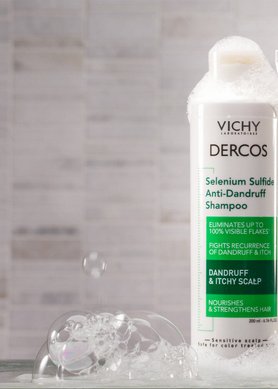
Understanding the underlying cause is essential to knowing how to manage a sensitive scalp. For dandruff, an anti-dandruff shampoo such as the Vichy Dercos Anti-Dandruff Shampoo is a good starting point.
Dandruff and Flaky Scalp
Dandruff is a common scalp disorder affecting a large portion of the population, including people of pre-pubertal age. It occurs when dead skin cells from the scalp, commonly due to dandruff or dry skin, shed at an accelerated rate. The fungus Malassezia globosa ingests oil from your scalp and releases acids that irritate the scalp and damage its moisture barrier. This triggers a cycle that causes the skin on your scalp to flake off in the white to yellow flakes commonly associated with dandruff.
Fortunately, shampoos containing ketoconazole, selenium sulfide, or zinc pyrithione can be used to treat dandruff at home. These substances, which have antifungal and antibacterial properties, can reduce the growth of the fungus that causes flake formation on the scalp.
Itchy Scalp
Several conditions, including lice, ringworm, psoriasis, allergic reactions to hair products, dermatitis, and stress can cause an itchy scalp. However, dandruff is among the most common causes.
If dandruff is causing your irritation, an anti-dandruff shampoo is your best option. You can also use a clarifying shampoo for oily scalps to remove any buildup.